
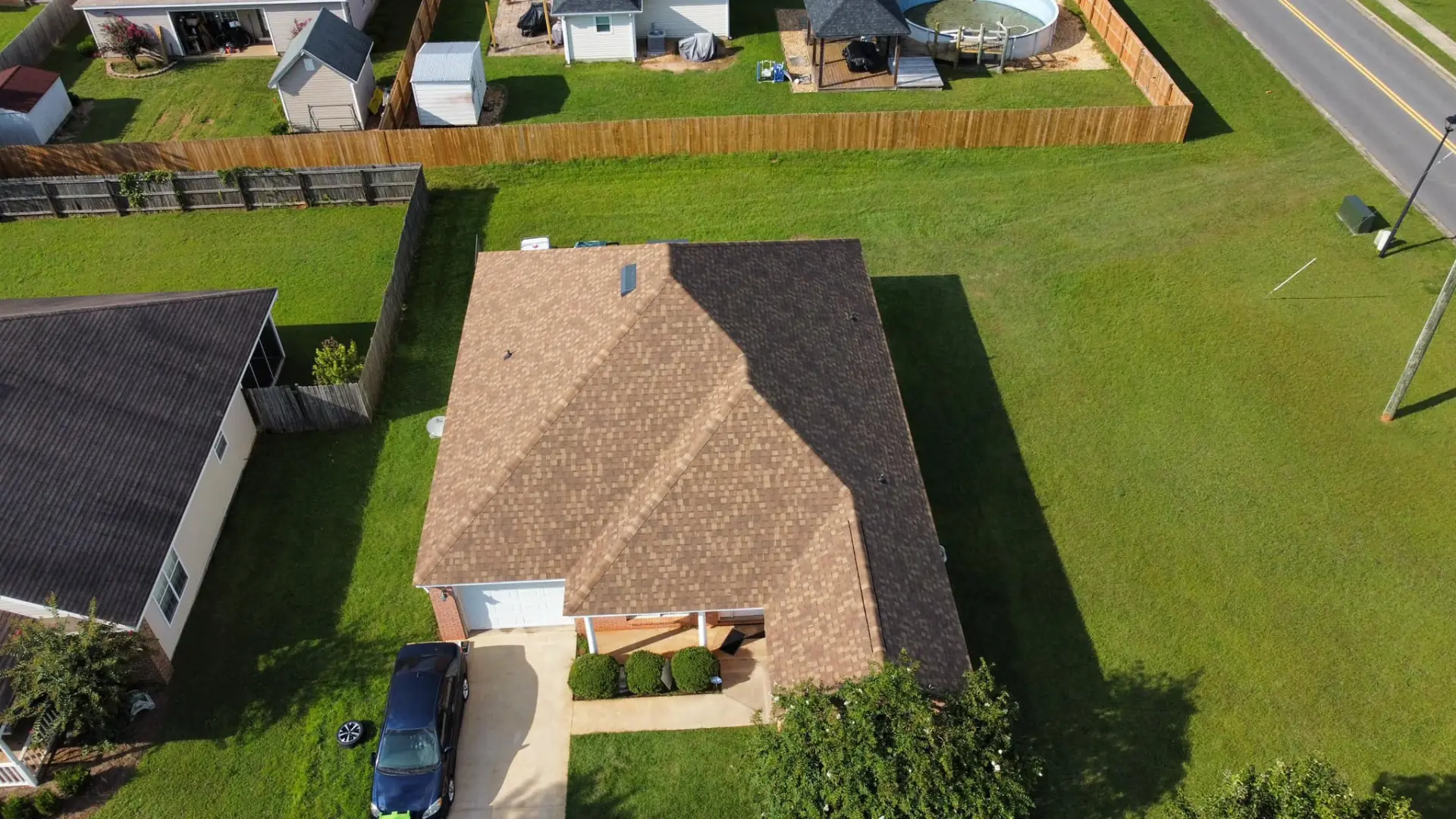
Hail Damage Roof Repair in Gleneagle, CO
Hail damage roof repair in Gleneagle, CO. Storms build over the Palmer Divide and land here early in their run. Free inspection and written claim documentation.
A hailstorm that reaches Gleneagle is usually a young one. The cells that build over the Palmer Divide come off the high ground right above this stretch of the county, so the stones fall here before the storm has spent much of anything. What they do to a shingle roof mostly can't be seen from the yard: bruises in the mat, granules washed into the gutters, dents in every piece of soft metal up there.
In the first days after a storm, the repair matters less than the record. Get the roof inspected while the marks are fresh, get every one of them photographed, and don't sign anything a stranger brings to your door. Our inspection is free, the findings come to you in writing, and nothing about them obligates you to file a claim or to hire us.
We assess the damage, document what we find in writing, and tell you honestly whether it needs work.
Book a free inspection (719) 600-7852What hail actually does to a shingle roof
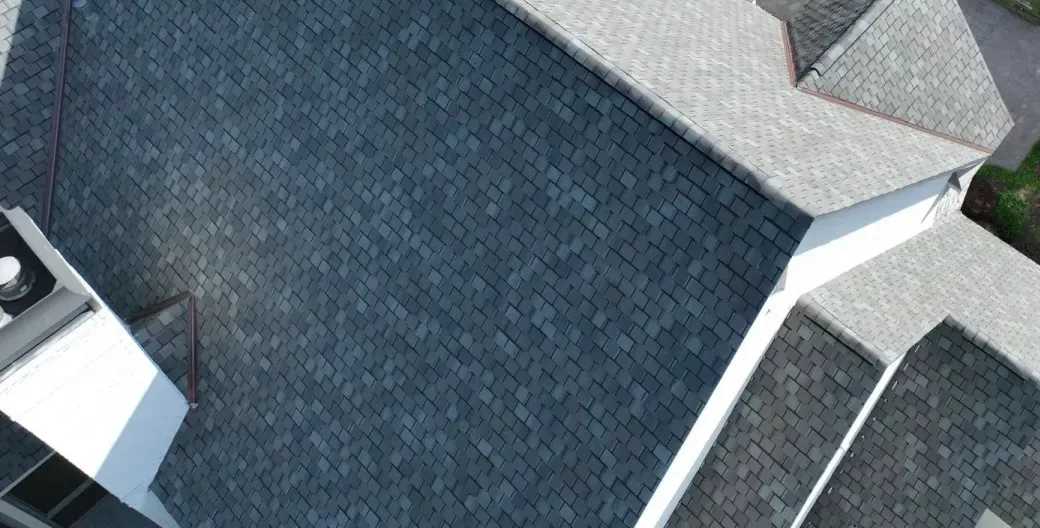
A hailstone rarely breaks an asphalt shingle outright. It bruises it: the impact crushes the granule surface into the mat beneath, the loosened granules wash off over the next few rains, and the bare spot is left open to the sun. At this elevation the UV is strong enough that a bruised patch weathers far faster than the sealed shingle around it, which is how a roof passes a glance in July and leaks the following spring.
The metal on the roof records the same storm more legibly. Vents, flashing, gutter aprons and the gutters themselves dent at stone sizes that bruise shingles, and a dent neither heals nor washes away. That's why our post-storm inspection photographs the shingle field and the soft metal together: the dents corroborate the bruises, and the two side by side are much harder to argue with than either alone.
- Free post-storm inspection of the roof and exterior, every finding photographed
- Bruise and granule-loss mapping across all slopes, not just the one that faced the storm
- Soft-metal evidence documented: vents, flashing, gutter aprons, gutters
- A dated written record you keep, whether or not a claim is ever filed
- A straight answer when the damage isn't enough to justify a claim
Hail brings crews to Gleneagle that weren't here before the storm and won't be here after the checks clear. Some knock the same afternoon with a contract on a clipboard, and the pitch often includes an offer to cover your deductible. Colorado law forbids that offer, which makes it less a discount than a signal about who you're dealing with. We've laid the whole argument out in the storm chasers post on our blog, and it reduces to one question: will this company still answer its phone here when the warranty matters?
The better sequence is slower. Photograph what you can safely see from the ground, note when the storm hit and how big the stones looked if you saw them fall, and get a roofer onto the roof while the bruising is fresh. Fresh damage is soft under a thumb and unambiguous in photos. A season later the same marks read as ordinary weathering, and an adjuster is entitled to call them that. The record built in the first week is what a claim stands on months down the line.
How the insurance claim runs from here
Filing is your decision and your call to make; the policy is yours. From there we carry the technical side. You get our photo record and written scope, and when your insurer sends an adjuster we meet them on the roof, walk the same slopes, and point at the same marks, so the scope of loss gets settled over evidence rather than over the phone. If the adjuster's scope misses damage we documented, we raise it on the spot with the photographs in hand.
Two timing points are worth knowing. Insurers limit how long you have to file after a storm, so an early inspection protects a decision you can still make later. And if the damage totals the roof, the claim is the natural moment to weigh coming back with Class 4 impact-resistant shingles, built to take the next storm better than the roof that just failed took this one. That conversation belongs after the scope is settled, never as a condition of our help with it.
Hail damage repair around Gleneagle and the Front Range.
The same crew and materials in every town we serve. Start from your own town, or call (719) 600-7852 and skip the reading.
Hail Damage Repair in Gleneagle: what homeowners ask
A crew I've never heard of knocked right after the storm. Should I let them on my roof?
Be careful about it. An unfamiliar crew on your roof can create damage as easily as document it, and signing their paperwork at the door can commit your claim to them before you've compared anyone. Take the flyer if you want, then get an inspection from a company with a local address and a reason to still be reachable long after storm season ends.
Does hail damage always mean a full roof replacement?
No. The scope follows what's actually on the roof. A young roof clipped by the edge of a cell may need one slope or a repair, while widespread bruising across every slope usually justifies replacement, and the insurer's scope should reflect whichever is true. Our job is to document what's there accurately, not to talk every storm into a tear-off.
How long do I have to file a hail claim?
Your policy sets the window and insurers enforce it, and no single number covers every policy, so don't let a busy season run out the clock. That's the practical case for an early free inspection: it tells you whether you have a claim at all while filing is still open, and it dates the evidence from before the damage had time to weather into ambiguity.
Do I have to use the contractor my insurance company suggests?
No. You choose your own contractor; the insurer's job is to pay the covered scope, not to pick who performs the work. A recommended contractor may be perfectly good, but the recommendation is built on the insurer's relationships, not on your roof. Compare written scopes and hire the company you'd want standing behind the workmanship afterward.

Free inspections, honest estimates, and no-pressure guidance, from the first inspection to the final nail.