
Roofing Company in Aurora, CO
Residential & commercial roofing • Storm restoration • Insurance claims
From Southlands to Hoffman Heights, Aurora sits out on the open plains where a storm arrives with nothing left to slow it down. We cover the whole city from Colorado Springs: a free inspection, the findings in writing, and a straight answer on whether you are looking at a claim, a repair, or a roof with years left in it.
- Aurora, COService area
- 24/7 emergencyServices that work
- Licensedand insured
A Top-Rated Roofing Company in Aurora, CO
Aurora stretches across three counties, more than 160 square miles, and just about every kind of neighborhood there is, from the older streets around Del Mar Park to the new construction out at Southlands. What the houses have in common is the weather: hard sun, spring hail, wind off the eastern plains, and winters that swing between bone-dry cold and heavy wet snow. The roof carries all of it.
We are a division of the Colorado Springs company rather than a crew that follows storms, and we have managed thousands of claims across the Front Range. That matters mostly for what happens after the job: the suppliers, the warranty paperwork and the people who answer the phone are all still here next season. Aurora is around 70 miles north of that office, and we cover it deliberately rather than treating it as an outer suburb of the Springs.
Homeowners usually reach us in one of three situations: a storm just went through and the damage needs assessing, a roof has quietly aged out and started leaking, or a replacement is being planned ahead of trouble. All three start the same way, with somebody getting on the roof and writing down what is actually up there.
More about us
Every quote below is a real Google review from a real customer. Read what they mention: not a product, but how the job was run. Arriving when we said we would, explaining what was actually wrong, protecting the property, and cleaning up completely. That is what we hold every crew to, on every roof.
5.0 stars from 44 Google reviews“Briley and his team are truly top notch. They took the roof all the way down to the plywood and replaced any damaged or rotten areas exactly like they said they would — very transparent about everything, from the initial inspection where they showed pictures of what was going on all the way to install.”
“Briley and his team did a great job from start to finish. He met our insurance adjuster at the property and took pictures of the process, which ended up being the difference between the insurance company approving the claim and declining it.”
“We are VERY HAPPY with Cornerstone Roofing and Restoration in Colorado Springs! They started early, completed their work, cleaned up all fallen debris, and no nails were littered after they left. It's not easy to find an excellent roofer, but this company, by far, is OUTSTANDING!”
“The entire team and sub-contractors were very professional, courteous and competent. Sam walked me through the entire process and handled most interactions with my insurance, including several code upgrades — he kept stress levels for me very low.”
“Cornerstone was our second attempt to repair a leak in my roof. They did a fantastic job. They took pictures showing me concerns before the repairs, underlying damage after tiles were removed, and the progress of the repairs. Couldn't be happier.”
“Cornerstone Roofing and Restoration in CO Springs are awesome. They did such a great job on our new roof plus the gutters. Christopher and Briley are great associates with keeping us informed and updated with information during the process.”
“They were very professional and went above and beyond what normal roofing would have been. Removed swamp cooler stand and electrical box, replaced plywood to ensure no leaking, and took great care in clean up. Sales person Eli was very knowledgeable.”
“Cornerstone roofing did an excellent job. They provided a roofing certification that needed to be able to close on the sale of my house. I would highly recommend them.”
Residential Roofing & Exterior Services in Aurora, CO
Aurora spreads across three counties and several decades of building, so roof age changes from one subdivision to the next in a way it does not in a town that filled in all at once. What your neighborhood needs is not what the next one does.
So the answer starts with a free inspection and a finding you get in writing, whether that finding is a claim, a repair, or a roof with years left in it. Replacement, repair, maintenance and the gutters and siding that finish the exterior all follow from there.
Residential roofingAurora Commercial Roofing & Exterior Renovation
Commercial property here runs from small retail to warehouse and light industrial, most of it on low-slope roofs where the failure is a seam, a drain or a flashing detail rather than anything you would spot from the lot.
The building stock here is mixed enough that the right answer changes address to address, so we quote what the roof in front of us needs rather than what we would rather sell. New flat, TPO and metal systems, or a coating that adds years to one not yet ready for replacement. Work is scheduled around your hours and staged so operations keep running through it.
Commercial roofing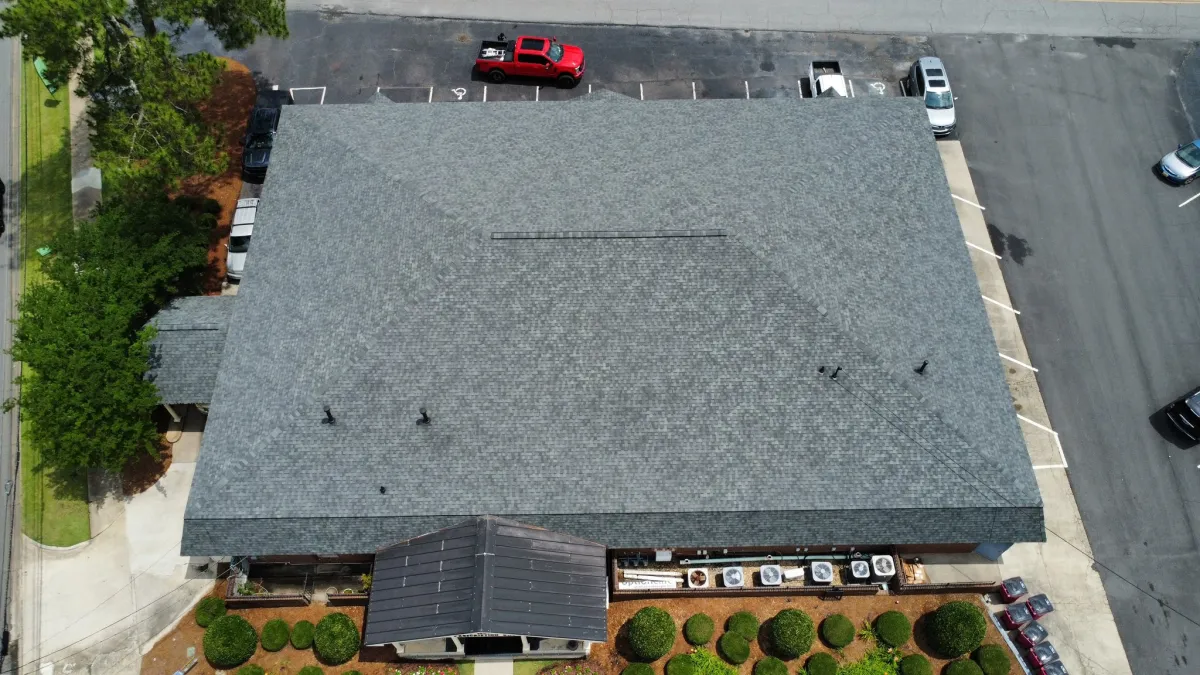
Our roofing services in Aurora
From homes to commercial buildings, we cover everything above your walls. Full replacement, emergency storm repair, gutters, siding and the maintenance in between, all run by the same crew to the same standard whatever the size of the job.
Explore all services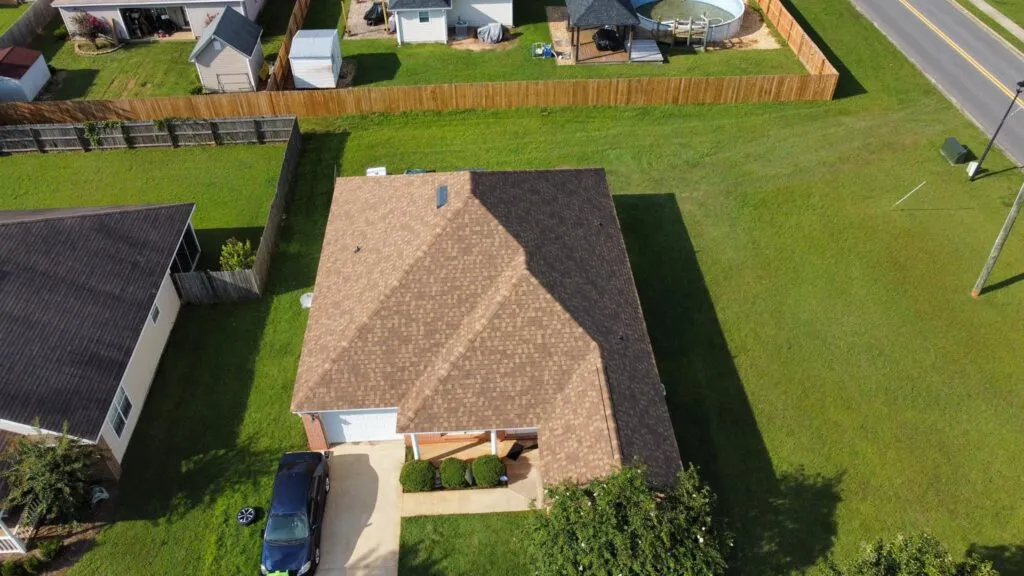
Roof Inspections
Annual maintenance checks, pre-purchase inspections for a sale, post-storm assessments and claim documentation. Free, with the findings written down and photographed.Learn more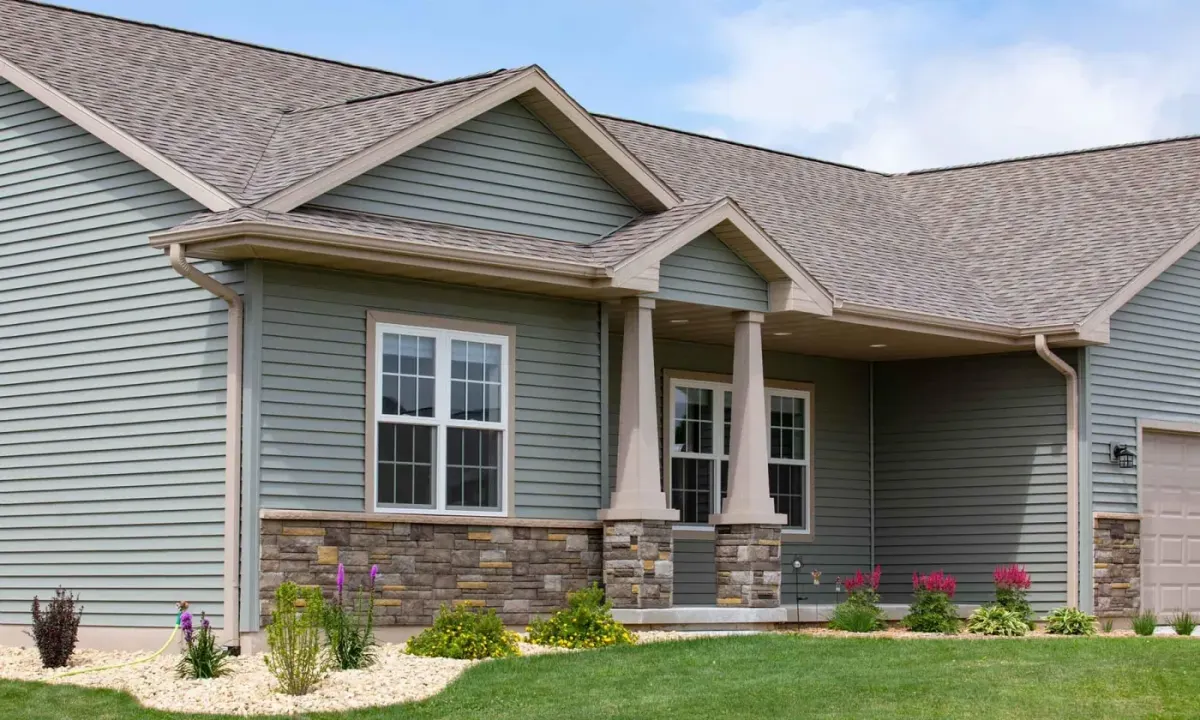
Vinyl Siding Installation & Replacement
Hail does not stop at the roofline. On a full storm restoration we take on the dented fascia, cracked siding, torn screens and damaged garage doors under one scope rather than leaving you to chase five trades.Learn more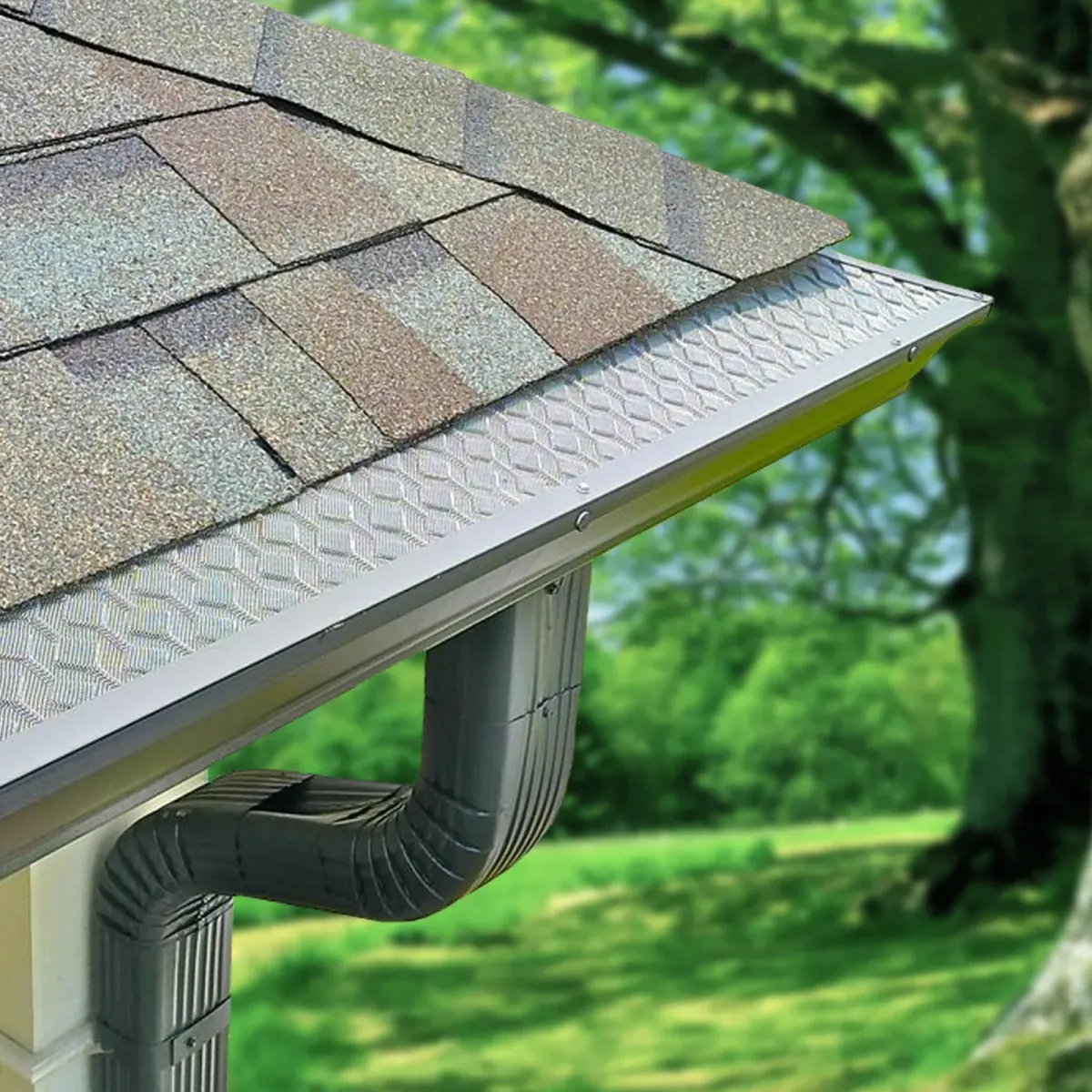
Gutter Installation & Protection
Seamless aluminum and steel in colors that match your fascia, plus guard systems that keep the cottonwood seed and pine needle out of the downspouts. A roof without working gutters is doing half its job.Learn more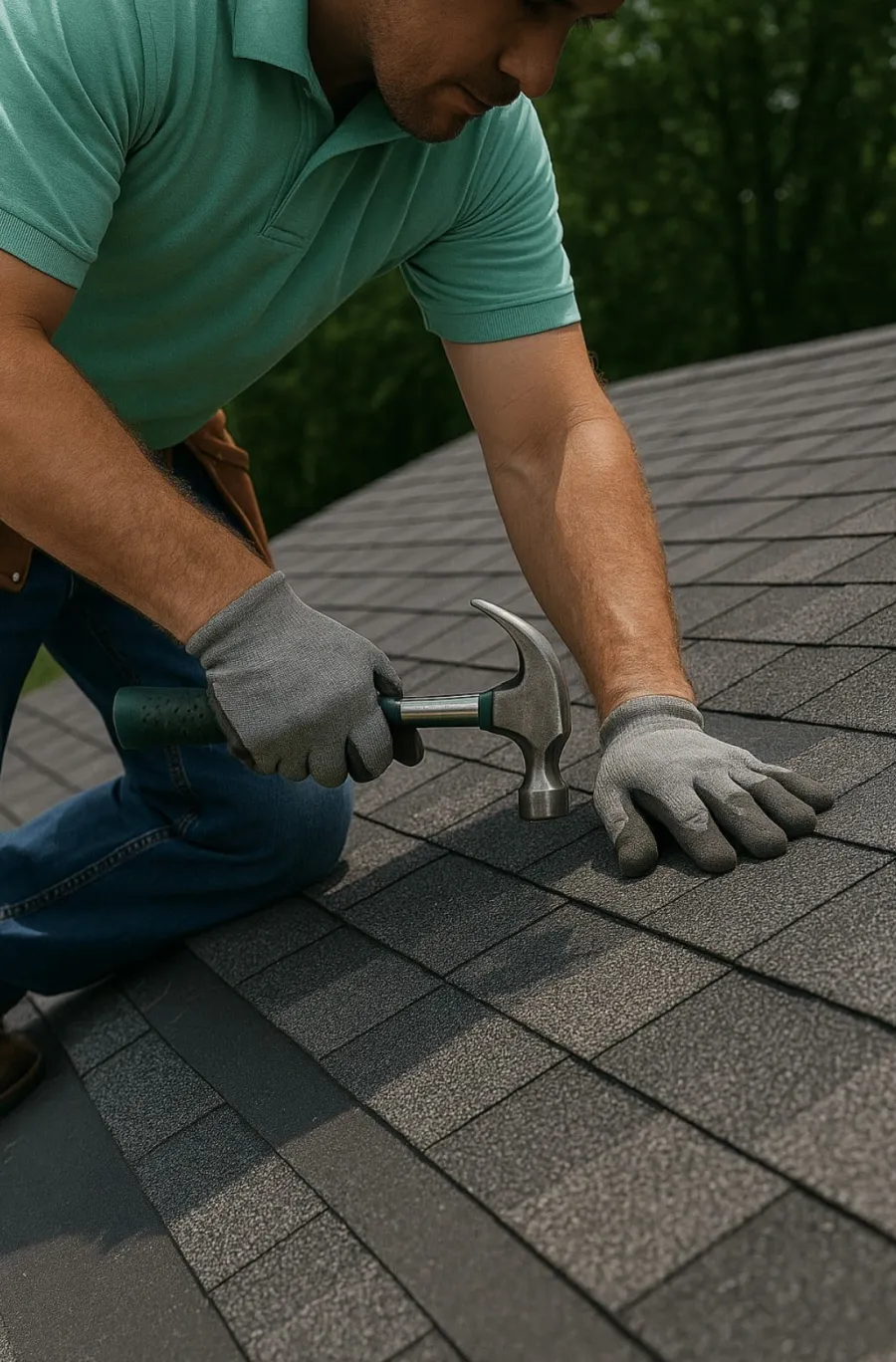
Roof Repairs
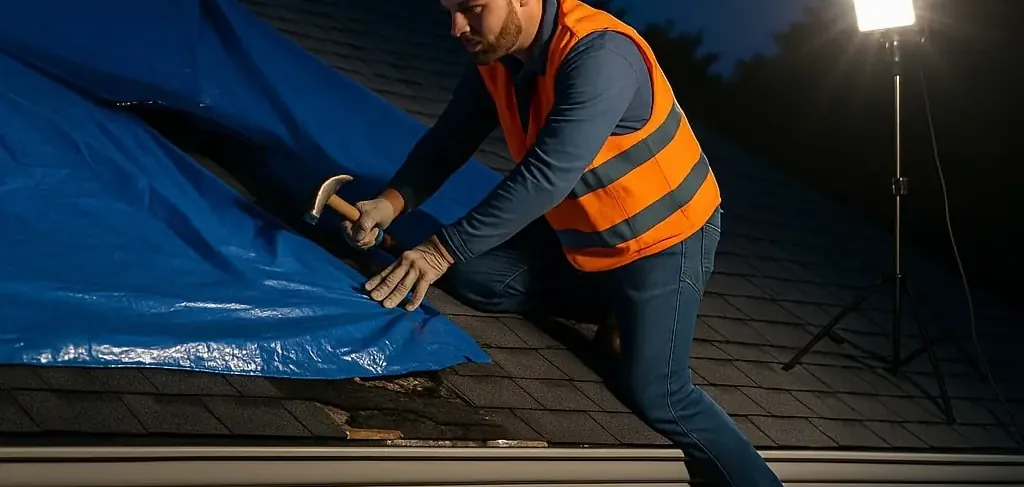
Emergency tarping and rapid response for active leaks, wind-blown shingle loss and storm punctures. The leak is traced to its actual source first, because water rarely enters directly above where it appears on your ceiling.Learn more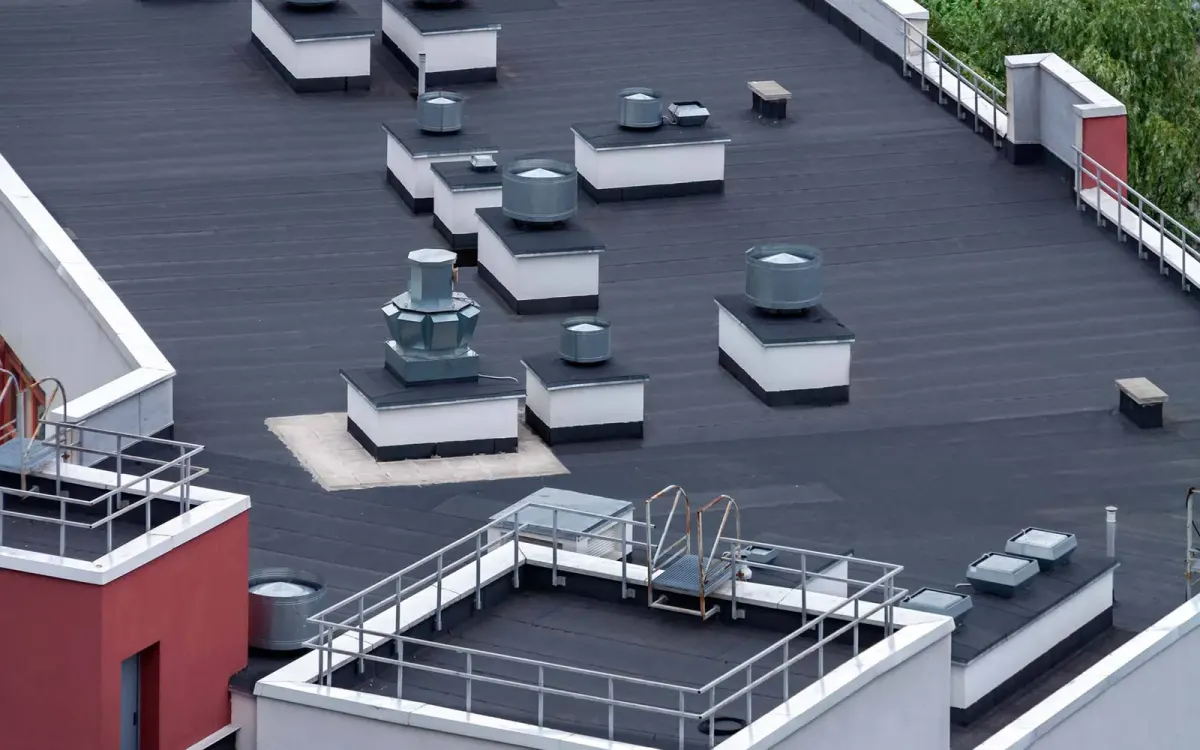
Commercial Roofing
TPO, EPDM, modified bitumen and standing seam across the Havana Street corridor and the warehouse districts serving the airport. Drainage, curb flashing and parapet terminations are where these roofs are won or lost.Learn more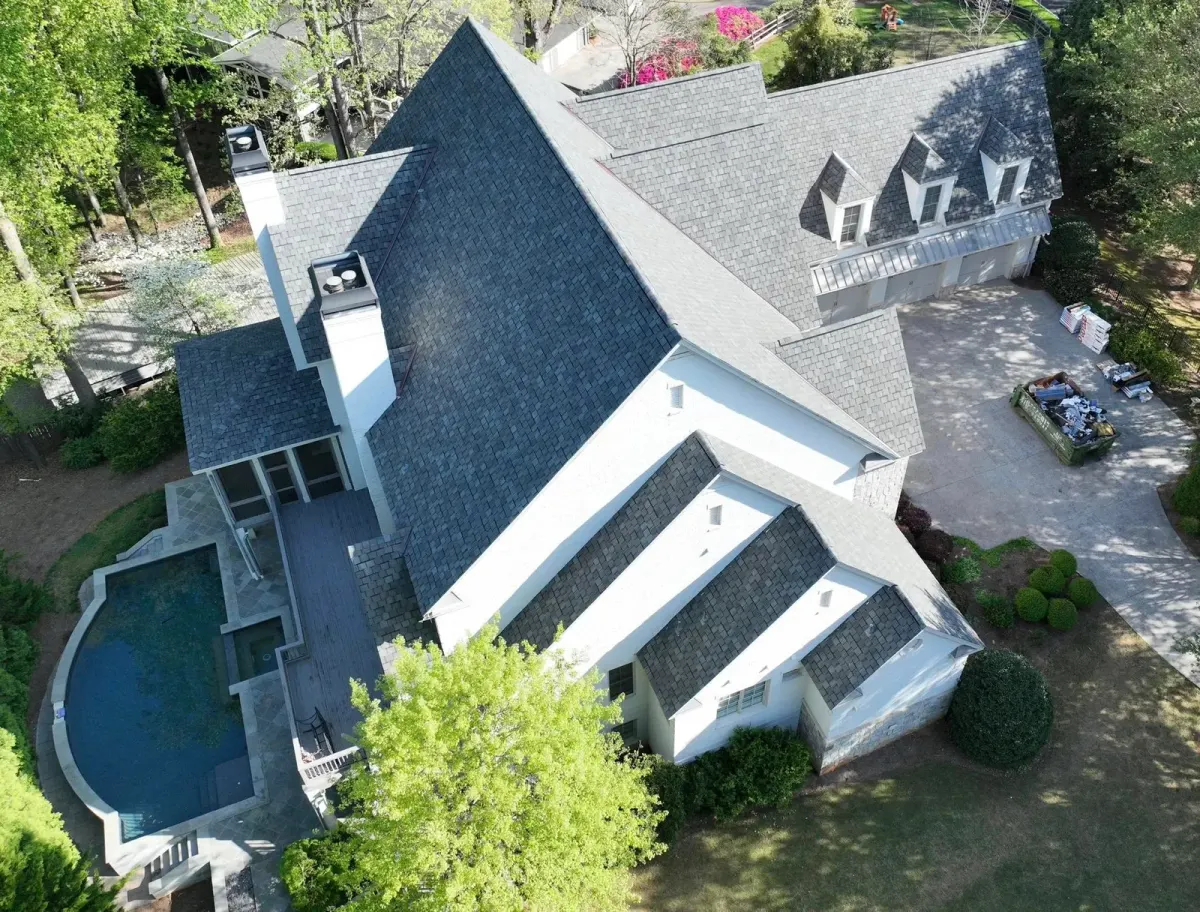
Residential Roofing
Full replacements, from a ranch in Hoffman Heights to a two-story near Expo Park. Architectural asphalt, Class 4 impact-resistant systems, metal, stone-coated steel and synthetic composite, with the trade-offs laid out before you choose.Learn more
Why Aurora homeowners choose Cornerstone
Storm chasers, deductible-waiving scams and subcontracted labor with nobody checking it have done real damage to how roofers are seen, and a hail market like this one draws all of it. Here is what we do about that, plainly.
The number on this page reaches staff on the Front Range, not a call center. If something goes wrong with a roof we installed, you can find us.
We have walked away from homeowners who wanted a claim filed on a roof with no storm damage on it. If yours needs a repair, we repair it and say so.
A shingle warranty depends on how the roof went on: cut a corner on the nailing, the underlayment or the flashing and the maker can decline it. Ours go on to the spec, by the crews of Atlas' top-tier contractor.
We document the damage, meet your adjuster on the roof, and argue for a scope that matches what restoring the house takes. The deductible stays yours.
Understanding Aurora's roofing conditions
Four things work on a roof out here and they arrive in different seasons, which is why a roof specified for one and not the others fails in the one it was not specified for.
Hail, first and worst
Aurora sits in the corridor running from Texas up through Colorado into Wyoming that takes more severe hail than anywhere else in the country, and Colorado is perennially near the top of the table for hail claims. What most homeowners miss is that the damage is usually invisible from the sidewalk: hail bruises a shingle by fracturing the mat under the asphalt coating, the granules let go over the following year or two, and the leak shows up long after the filing window closed. So we inspect after the storm rather than after the ceiling stains, and the vents, gutters and flashing get as much attention as the field. Dented soft metal is often the clearest evidence an adjuster will accept.
Wind, the quiet one
Winter downslope events bring hard wind off the mountains, and the rest of the year it comes across open country with nothing to break it. Aurora sets the design wind speed for a typical house at 105 to 110 mph, which tells you what the roof is expected to stand up to. Wind rarely takes one apart in a single go, though. It breaks the adhesive seal between courses, and the shingle looks fine from the ground until the next driven rain pushes water under it and into the decking. That is the argument for fastening to the manufacturer's high-wind pattern rather than the four-nail minimum.
Sun at altitude
Aurora sits at about 5,500 feet, and ultraviolet intensity climbs roughly ten percent for every thousand meters of elevation, so a roof here takes something like seventeen percent more of it than one at sea level. It is real, and it is cumulative, but it is worth being straight about the order: hail is what takes most Front Range roofs off early, and sun is what quietly shortens the ones hail misses. It is still the best case for spending the extra on a better-stabilized shingle rather than on anything you can see from the street.
Freeze-thaw and ice dams
A January day here can run 55 degrees in the afternoon sun and single digits by morning, and every seal, fastener and flashing joint on the roof cycles with it. Where attic ventilation is short or the ice-and-water membrane was never carried far enough up from the eaves, that swing is what builds an ice dam and backs water up under the courses and into the attic.
What a Cornerstone installation looks like
A roof is a construction project, and how it turns out depends far more on the sequence and the crew than on which shingle you picked off the board.
Property protection
Before a shingle comes off, the crew tarps landscaping, covers HVAC equipment, protects windows and garage doors from falling debris, and sets the dump trailer. The target is no damage to anything other than the roof.
Tear-off, down to the wood
Every old shingle comes off. It is the least glamorous hour of the job and the easiest to rush, and rushing it is how a valley ends up with old nails in it that leak two years later.
Decking inspected and repaired
With the roof open we look at every square foot of decking, and soft spots, water damage and rot get cut out and replaced. You get a written count of the sheets and photographs of them. New shingles over compromised decking is a new roof with the old roof's problems.
Ice and water shield goes on first
Self-adhering membrane at the eaves, through the valleys and around every penetration. Given the ice dam risk here it is not an upgrade, and code requires it.
Synthetic underlayment across the field
Synthetic rather than felt. It resists tearing, lies flat, takes foot traffic without crumbling, and is a far better second line of defense on the day a shingle above it fails.
New flashing, never reused
Step flashing, valley metal, drip edge and pipe boots all go on new. Reusing old flashing is the other corner that reliably buys you a future leak.
Shingles to the high-wind pattern
Fastened to the manufacturer's specified pattern for the product and this exposure, with the nail placement, exposure and offset the warranty actually depends on.
Ventilation calculated, not guessed
We work out the attic's net free area requirement and fit ridge, soffit and exhaust venting to meet it. Poor ventilation is the leading cause of a roof failing early.
Cleanup, then a walkthrough
Several passes with magnetic sweepers across lawn, driveway and beds, then a walk around the house with you before the crew leaves.
Roofing materials that make sense in Aurora
The system on the roof is one of the larger decisions in the project, and the right answer moves with how long you plan to be in the house and what your carrier will do about impact resistance. One thing worth knowing before you read a warranty: a 30-year shingle is covered against manufacturing defects for 30 years, which is not the same as lasting that long. The figures below are working service life in this climate, and hail can end any of them early.
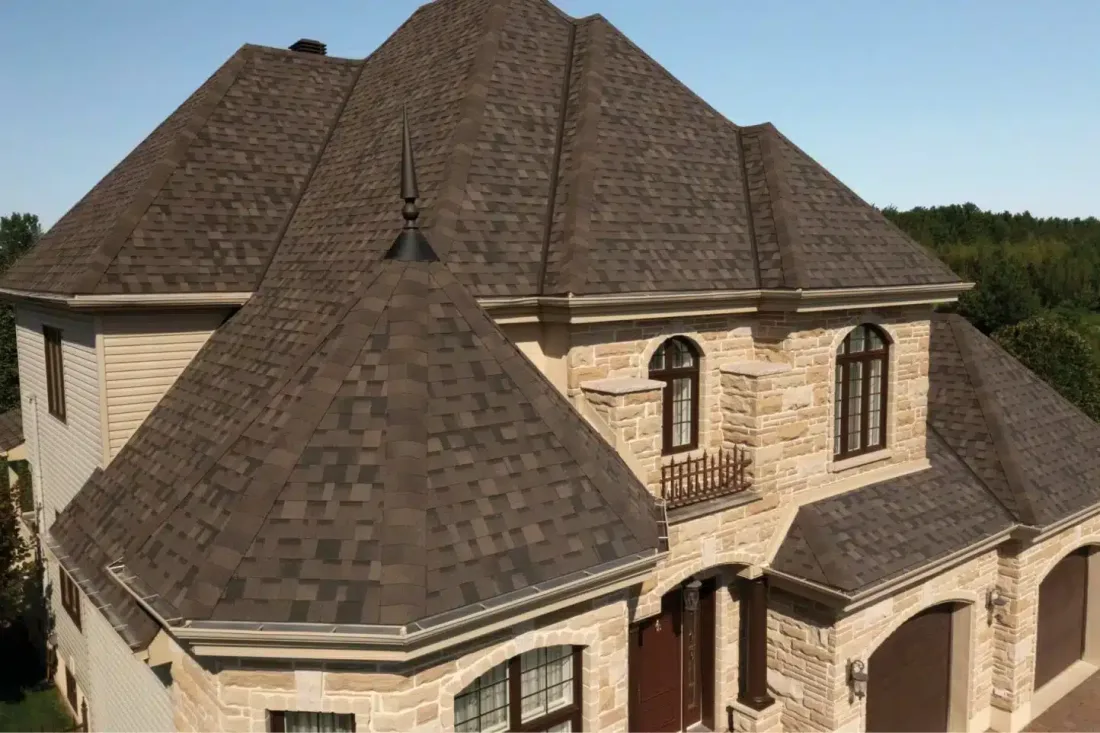
- Architectural asphalt20 to 25 years here
- Laminated dimensional shingles are the entry point for a quality roof in this climate and the dominant material across Aurora: better wind ratings, longer warranties and more depth than the flat three-tab they replaced, for a modest step up in price. Three-tab is now mostly an outbuilding and tight-budget product, and at altitude it is the shorter bet.
- Class 4 impact-resistant25 to 30 years here
- Built for hail, and tested to UL 2218: a reinforced mat, a rubberized polymer-modified asphalt layer and better granule adhesion, all of it there to absorb an impact without fracturing. Many Colorado carriers discount the premium on a roof carrying it. Ask yours what it is worth on your policy before you choose, because over the life of the roof that discount often decides the math.
- Metal, standing seam or stone-coated steel40 to 50 years
- The long play. Standing seam reads modern and architectural; stone-coated steel gives you metal's service life with the look of shingle or tile. Both shed snow well and resist fire and hail. More up front than asphalt, less per year across the run.
- Synthetic composite50-year warranties
- Engineered to look like slate or cedar shake with modern performance behind it: impact resistance, high wind ratings and long warranties. A premium product at a premium price, and the answer when the look matters and the traditional material's maintenance does not appeal.
- Tile50 years and up
- Clay and concrete tile is less common here than in the southwest, but it stays on the list for the right architecture and for an owner who intends to do this once. The structure has to carry the weight, and repairs want someone who has worked tile before.
How an Aurora hail claim actually goes
When a real hail or wind event crosses the metro, the claim is what decides whether the house gets restored properly. Knowing its shape helps, and it tells you what a roofer should be doing on your behalf.
You call your carrier
This is the one step that has to be you. They open a claim number, schedule an adjuster and set a filing deadline. Policies limit reporting to a fixed window from the date of loss, and missing it makes the damage yours whatever caused it. Check yours rather than assuming.
The adjuster comes out
This is usually where the outcome gets decided. An adjuster represents the carrier, and while most work ethically, advocating for you is not their job. We meet them on the roof, walk the damage found on our own inspection, and hand over measurements and photographs. An adjuster who walks a roof alone misses things that then have to be chased later.
Approval, and the first check
An approved claim arrives with a scope of work and a pricing breakdown. The first check is usually actual cash value: the damage less depreciation and less your deductible. The depreciation is released on a second check once the work is finished and invoiced.
Supplements while the work runs
Opening a roof turns up what nobody could see from the surface: rotted decking, undersized ventilation, code-required upgrades. Those go back to the carrier as a supplement, so they do not quietly become yours.
The deductible stays yours, by law
Colorado is specific about this. Under C.R.S. 6-22-105 a roofing contractor working from insurance proceeds may not advertise or promise to pay, waive or rebate any part of your deductible, and C.R.S. 6-22-103 requires your written contract to say so. If a contractor offers to absorb it anyway, your insurer is not obliged to consider that contractor's estimate at all, and you or the carrier can sue them for damages. We are straight about it from the first conversation.
Across Aurora, and out to the county lines
Aurora is enormous, more than 160 square miles over parts of three counties, and the neighborhoods in it went up decades apart. No part of it is off our map, and neither is the commercial property on the Havana Street corridor, the warehouse districts serving the airport, or the business parks out along E-470. The drive is the same honest conversation wherever in the city you are.
The older neighborhoods bring complicated roof geometry, multiple dormers and long valleys, and on that shape the flashing decides how the roof performs rather than the shingle over it. The newer edge of town brings simpler roofs, builder-grade shingles already well into their service life, and covenants on color and profile. We check what yours allows before the tear-off, not after the dumpster is on the driveway.
- Southlands
- Saddle Rock
- Murphy Creek
- Tollgate Crossing
- Meadowood
- Heather Gardens
- Seven Hills
- Hoffman Heights
- Del Mar
- Expo Park
- Aurora Highlands
- Horizon Uptown
- Painted Prairie
Financing for Aurora homeowners
A roof rarely fails at a convenient moment, and a storm sets its own schedule. We finance through GoodLeap so a replacement can happen when the damage says it needs to, rather than when a savings account is ready for it.
We will walk you through the options alongside the estimate, in the same conversation, so you can see the whole picture before deciding anything.
Financing options
Aurora roofing questions, answered
Common questions across Aurora, from reading hail damage you cannot see from the ground to how a claim actually proceeds.
You are based in Colorado Springs. Do you really cover Aurora?
Yes, properly rather than nominally. Aurora is around 70 miles north of the Colorado Springs office and we work it as its own market, with its own storm history and its own building stock. We travel for the free inspection, and when you call about a repair you get a real arrival window rather than an optimistic one.
My mail says Adams County but the house is in Aurora. Does the county matter for my roof?
Not for how the roof gets built. Aurora is a single city spread over parts of Arapahoe, Adams and Douglas counties, and which line your street falls on changes very little about the assembly. What it can change is the permit and inspection requirements that apply at your address, so we confirm those before we quote rather than discovering them mid-job.
The subdivision went up in the 1990s and the roof has never leaked. Is there anything to look at?
Usually there is. A 1990s Aurora roof has taken roughly thirty years of Colorado sun plus every hailstorm that crossed the metro in that time, and it rarely announces itself with a dramatic leak. It shows up as granule loss in the gutters, tabs brittle enough to crack when someone walks the roof, and seals that let go in the next wind event. An inspection tells you whether you are looking at a repair, a claim, or a few more good years.
How long does a roof replacement in Aurora actually take?
Most residential replacements run one to three days, depending on the size of the roof, its pitch and how cut up it is. Commercial work runs from a few days to a few weeks by square footage and system type. You get a timeline before anyone starts, and if weather is going to move it we tell you rather than letting you work it out from the driveway.
What should a roof replacement cost here?
It moves with size, pitch, complexity, the material you choose, how much decking has to be replaced, and whether you are spending claim money or your own. That is why the written estimate follows the inspection rather than the phone call. Get at least two, and be suspicious of one that comes in well under the others: legitimate roofing has a cost floor, and under it something is being left out of the scope.
Do impact-resistant shingles really cut my insurance premium?
Often, yes, though not by a fixed amount. Many Colorado carriers discount a roof built to the Class 4 UL 2218 impact standard, but each one sets its own figure and it usually applies to part of your premium rather than the whole bill. No Colorado law sets the number. Ask your agent what your policy would actually qualify for before you choose a shingle, because over the life of the roof that answer often decides which one makes sense.
Will you deal with my insurance company?
Yes, from the point you have made the first call. We meet your adjuster on the roof, hand over photo documentation and measurements, write estimates in the same Xactimate software the carriers use, and handle the supplement process if the approved scope comes up short of what the repair actually takes. The one step that has to be you is opening the claim.
Are impact-resistant shingles worth it in Colorado?
For most Front Range homeowners, yes. Class 4 impact-resistant shingles are built to survive hail that would bruise or crack a standard shingle, and many Colorado insurers offer a premium discount for installing them. We’ll show you the options and let you weigh the up-front cost against the discount and the reduced chance of another claim.
How do I know if my roof has hail damage?
Hail damage is often invisible from the ground. The signs we look for are bruising (soft spots where the granules have been knocked loose and the mat beneath is exposed), along with dented vents, gutters and flashing. If a storm has come through, get a free inspection rather than waiting for a leak, because insurers usually limit how long you have to file.
Do you help with insurance claims?
Yes. Storm claims are a large part of what we do. We document the damage, meet the adjuster on site, and make sure the scope of the loss reflects what we actually found on the roof.
Why does altitude matter for a roof?
Thinner air at elevation means more intense UV, which ages asphalt shingles faster than the same product would at sea level. Combined with sharp freeze-thaw swings, it puts far more stress on materials and sealing than a mild climate does. A roof can warm well above freezing in the sun and drop below it after dark, repeatedly, in a single winter week.
Roofing guidance for Aurora homeowners
Maintenance advice, storm preparation and the things worth knowing before you spend money on a roof in this climate.
View all articles June 22, 2026
How Much Does a Roof Replacement Cost in Colorado Springs? (2026 Guide)
For most Colorado Springs homeowners, a roof replacement is one of the largest single investments they will ever make in their property. So the first question almost everyone…Read article May 22, 2026
Storm Chasers vs Local Roofers: How to Spot Roofing Scams in Colorado Springs
Every spring and summer, a predictable cycle plays out across Colorado Springs and the Front Range. A major hailstorm rolls through. Roofs sustain damage. And within 24-72…Read article May 22, 2026
How to File a Roofing Insurance Claim in Colorado: A Step-by-Step Guide for Homeowners
Filing a roofing insurance claim in Colorado is one of the most stressful experiences a homeowner can face, especially when the damage came from an event you couldn’t…Read article
Storm damage, a roof at the end of its service life, a commercial property that needs a maintenance plan, or nothing more than planning ahead. The inspection is genuinely free and there is nothing attached to it.
If a roof is actively letting water in, say so when you call and we will treat it that way. If the timeline is relaxed, book the inspection and the detailed written estimate follows within a few days of the visit.