
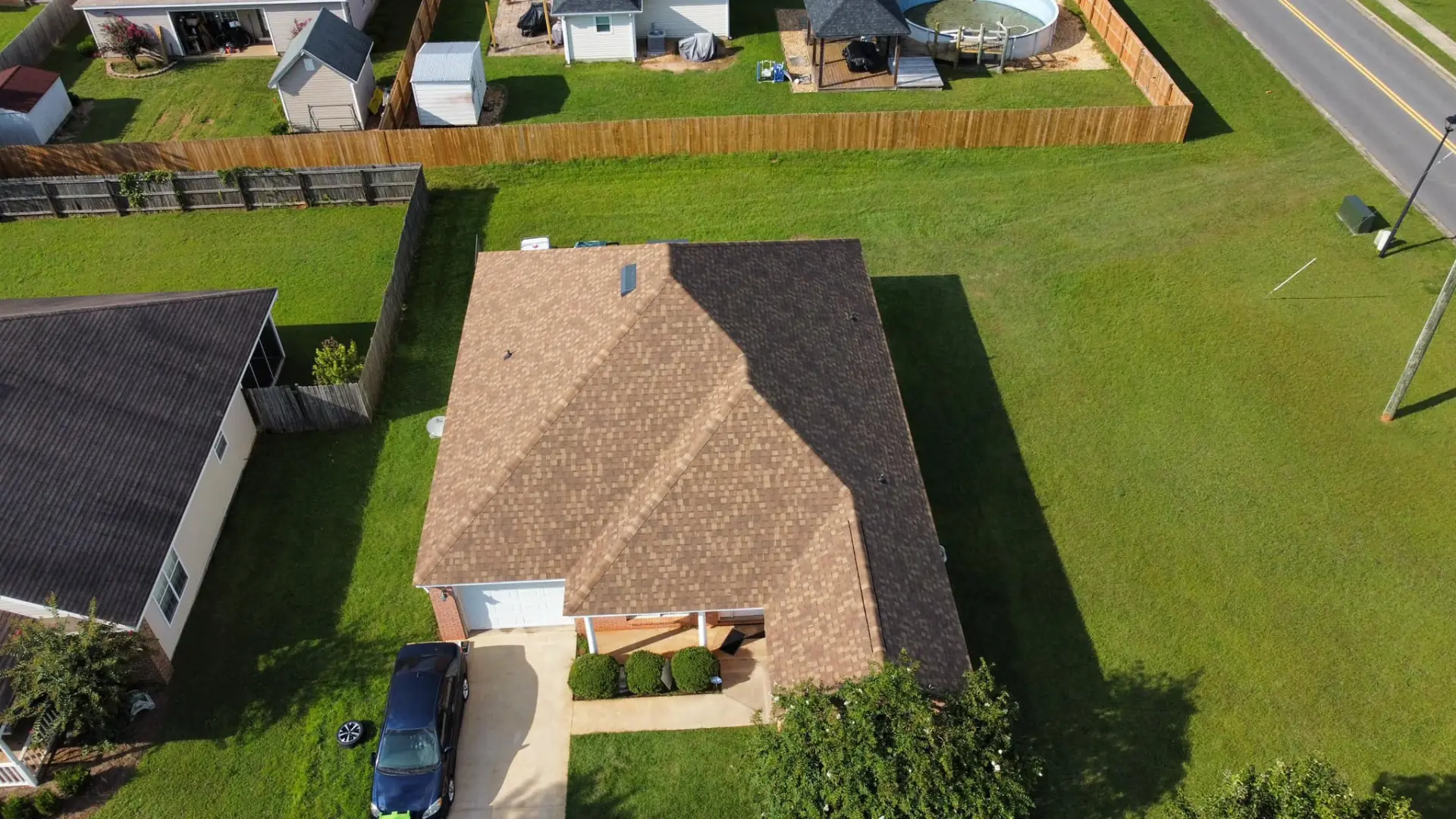
Hail Damage Roof Repair in Aurora, CO
Hail damage roof repair in Aurora, CO. Bruising you can't see from the ground, dented vents, granule loss: get a free inspection and full claim documentation.
Aurora sits on the open plains east of the foothills, in the hail corridor that runs from Texas up through Colorado into Wyoming, and a storm that crosses the metro arrives here with no terrain left to weaken it. What it leaves behind is mostly quiet: shingles that took an impact and show it as a soft bruise rather than a hole, granules starting to let go, dents in the vents and gutter metal. From the sidewalk, the roof can look untouched.
The first days after the storm decide most of what follows. A free inspection tells you whether there is damage worth a claim before you've committed to anything, the photographs date and document what the hail did while the evidence is fresh, and nothing has to be signed on your doorstep for any of that to happen. Hail markets pull in out-of-town crews after every event, and the ones knocking hardest are the ones worth checking slowest.
We assess the damage, document what we find in writing, and tell you honestly whether it needs work.
Book a free inspection (719) 600-7852The damage hail leaves that you cannot see from the yard
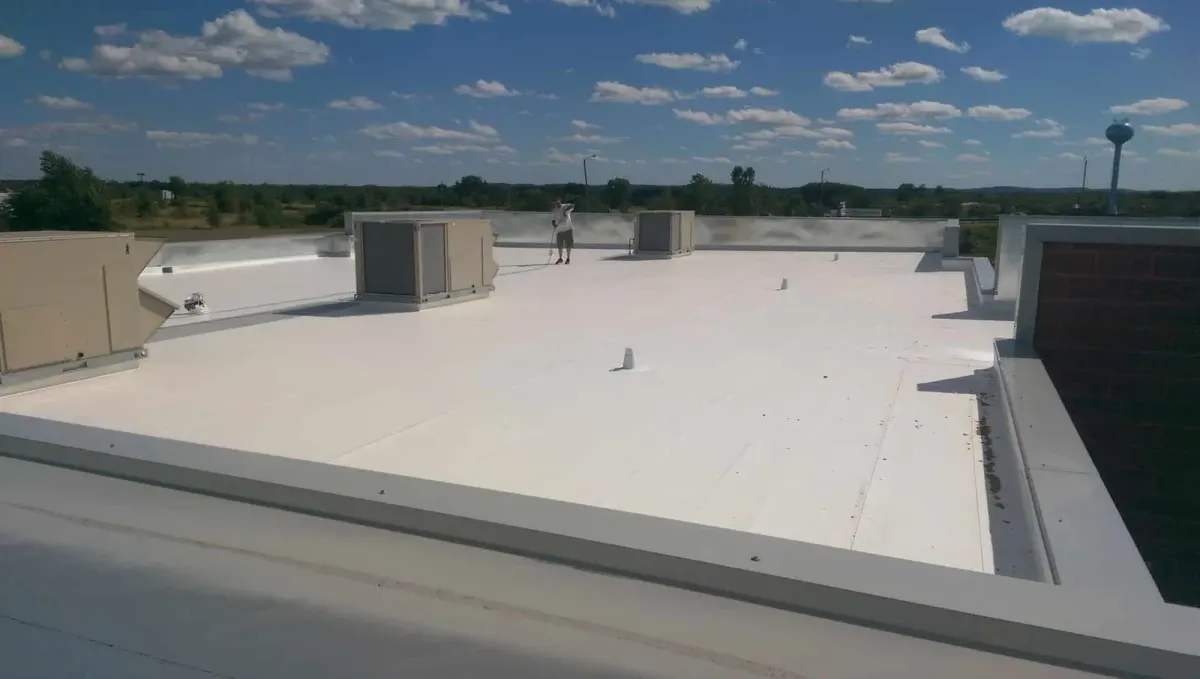
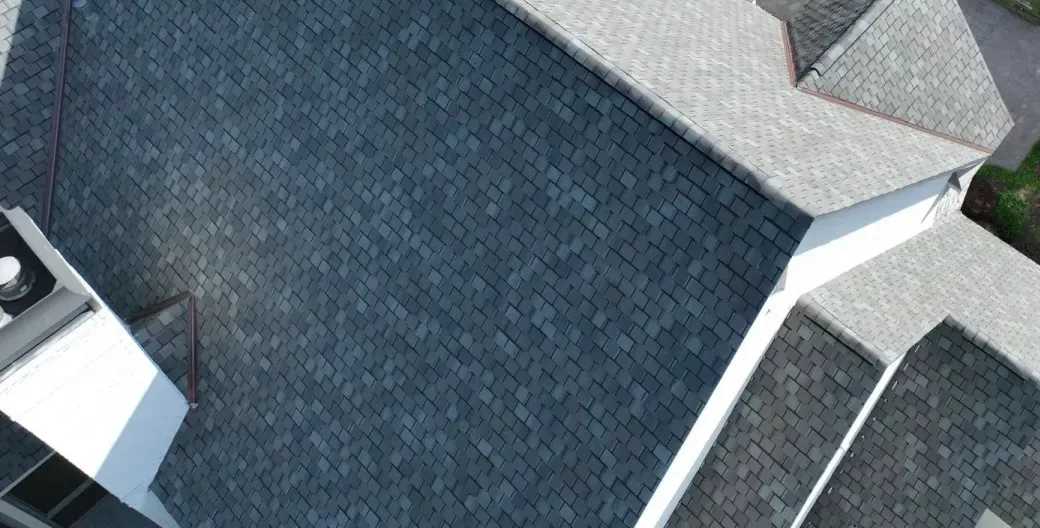
A hailstone big enough to matter doesn't usually punch through. It bruises. The impact fractures the mat beneath the asphalt while the surface stays roughly intact, and the shingle then fails from the inside over the following year or two as granules shed from the broken spot and the sun gets at the exposed asphalt. By the time that finally shows up as a leak, the window your insurer allows for filing has usually closed.
That is why a hail inspection reads the whole roof, not just the shingle field. The soft metal up there, vents, gutter aprons, flashing, holds a dent where an asphalt surface hides its bruise, and dented soft metal is often the clearest evidence an adjuster will accept. So the metal gets photographed with the same care as the field.
- Bruises in the shingle mat, marked and photographed while they're fresh
- Granule loss across the slopes and collecting in gutters and downspouts
- Dents in vents, gutter aprons, flashing and other soft metal
- Wind-blown shingle loss and any outright punctures from the same storm
- Damage below the roofline: dented fascia, cracked siding, torn screens
Have the roof inspected before you make any calls, your insurer included. The inspection is free, the findings come back in writing with photographs, and if there isn't claim-worthy damage up there, hearing that costs you nothing and spares you a claim on your record for a roof that didn't need one.
Then there's the doorbell. A hail event pulls storm-chasing crews into the metro within days, and the pitch at the door is speed: sign now and they'll handle everything. Our blog makes the longer case, but the short version is that a doorstep signature can commit your claim to a company with no local address before anyone independent has seen the roof. Colorado law is blunt about one of the classic hooks, too: a contractor working on insurance proceeds can't pay, waive or rebate your deductible, and one who offers to is telling you how they operate.
Documentation is the other job of the first week. Photographs of the roof, the metal, the screens and siding, anything the hail touched, dated close to the storm, are what the claim eventually stands on. Insurers limit how long you have to file, so an inspection now beats a leak later on every count that matters.
How the claim runs once you file
Opening the claim is the one step that has to be you: your carrier assigns a claim number and schedules an adjuster. From there, we're on the roof for the parts that decide the outcome. We meet the adjuster up top, walk them through what our inspection found, and hand over the photographs and measurements, because a scope written from the roof is consistently more complete than one written from the driveway.
An approved claim arrives with a scope of work and, typically, a first check for actual cash value, with the depreciation released after the work is finished and invoiced. If the tear-off exposes what nobody could see beforehand, rotted decking or code-required upgrades, that goes back to the carrier as a supplement instead of quietly becoming your cost. Our job through all of it is simple to state: the scope should reflect what is actually on the roof, no more and no less.
If the claim ends in a replacement, it's worth choosing the next roof with the next storm in mind. Class 4 impact-resistant shingles are built to take hail that bruises standard products, many Colorado carriers discount premiums for them, and as an Atlas Diamond Contractor we install them to the specification the warranty depends on. That's a conversation for after the scope is settled, not a condition of anything above.
Hail damage repair around Aurora and the Front Range.
The same crew and materials in every town we serve. Start from your own town, or call (719) 600-7852 and skip the reading.
Hail Damage Repair in Aurora: what homeowners ask
A roofer knocked on my door right after the storm. Should I sign anything?
Not on the doorstep. Some door-to-door crews are legitimate, but a hail market draws companies that follow storms from state to state, and a signature at the door can commit you before any independent inspection has happened. Take the flyer, then get a free inspection from a company you called rather than one that called on you. Treat any offer to cover your deductible as the signal to walk away, since Colorado law forbids it.
Half my street is getting new roofs. Does that mean mine took damage too?
It's a real signal, not proof. Aurora subdivisions tend to share a build year and a shingle spec, so the storm that totaled the neighbors' roofs hit yours at the same age with the same product. But hail falls unevenly and slopes face different directions, so the answer comes from an inspection of your roof, not an inference from theirs. If yours came through fine, the written finding will say that too.
The first check from my insurer won't cover the roof. Is that normal?
Usually, yes. Most policies pay in two stages: a first check for actual cash value, which is the damage minus depreciation and your deductible, and a second that releases the depreciation once the work is completed and invoiced. If the approved scope itself falls short of what the roof needs, that's a different problem, and it gets handled by supplementing the claim with documentation, not by trimming the work to fit the number.
The storm was months ago and nothing is leaking. Is it too late to do anything?
Maybe not, but the clock is real. Insurers limit how long you have after the date of loss to file, and the limit varies by policy, so check yours before assuming either way. Hail damage also gets harder to attribute as seasons pass and new weather lands on top of it. If the storm is still inside your filing window, an inspection now settles the question while the evidence still reads clearly.

Free inspections, honest estimates, and no-pressure guidance, from the first inspection to the final nail.